


School Attendance Problems In Young People
Many young people want to attend school but feel unable to. Learn what may sit behind school attendance problems and how to provide support.
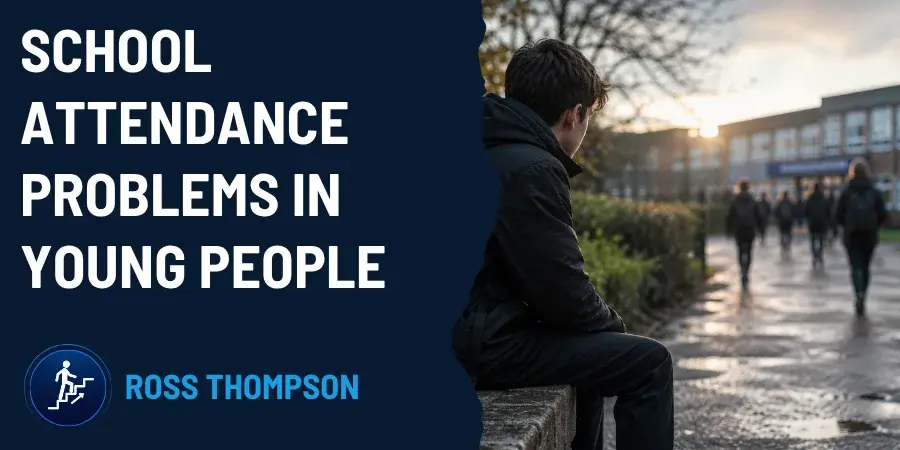
Why Some Young People Want To Attend School But Feel Unable To
When a young person stops attending school, it's easy to assume they simply don't want to be there.
In reality, many young people desperately want to attend but feel unable to. Over the years, I've worked with numerous young people experiencing school attendance problems, and one of the biggest lessons I've learned is that attendance is often the visible symptom of a much deeper issue.
Looking Beyond The Attendance Figure
Attendance data can tell us that a child is absent. It cannot tell us why.
One young person I supported had developed significant anxiety, was experiencing bullying and was becoming increasingly disconnected from school. By the time I became involved, both he and his parent were exhausted.
His parent felt frustrated, blamed and judged. More importantly, she felt nobody was listening to her concerns or taking the severity of her son's anxiety seriously.
The young person felt much the same. He believed staff thought he was making excuses. He felt misunderstood, isolated and completely separated from school.
School Attendance Problems Are Rarely Just About Attendance
One thing I've observed repeatedly throughout my career is that adults often become so focused on attendance percentages and getting a young person back through the school gates that they forget to ask a more important question:
"What is stopping this child from attending in the first place?"
I've worked with young people whose attendance difficulties were linked to anxiety, bullying, friendship issues, family circumstances, low confidence and emotional wellbeing.
The attendance issue was obvious. The reason behind it often wasn't. When we focus solely on attendance, we risk missing the child's voice and overlooking the wider picture.
What Was Missing?
The solution wasn't another attendance meeting, another target or another warning letter.
What was missing was understanding. The approach being used was too rigid and not sufficiently child-centred. Adults were focusing on what they could see rather than what was happening beneath the surface.
In many cases, young people are not refusing support. They are struggling with fears, worries or experiences that feel overwhelming. Until those issues are acknowledged, meaningful progress can be difficult.
The Turning Point Wasn't Attendance
Looking back, the turning point wasn't when attendance improved.
It happened much earlier.
After encouraging the young person to give me an opportunity to try and help, he agreed and came into my office after school once the other students had left for the day.
We had a conversation and then he chose to come back the next day. That may sound simple, but it was significant. It was the point where trust started to develop.
One thing I've learned over the years is that attendance rarely improves because of a spreadsheet, a target or another meeting. More often than not, it improves when a young person starts to trust someone enough to believe they are being listened to.
Trust came before attendance, and the relationship came before reintegration.
Relationships Create Change
As the professional relationship developed, we were able to explore what was happening beneath the surface.
We worked closely with parents, developed practical strategies, provided consistent support and gradually rebuilt confidence.
This wasn't a quick fix, nor was it a magic solution. It was a process built on patience, consistency and understanding.
Sometimes the most effective intervention is not a programme, policy or attendance procedure. Sometimes it is a trusted adult who takes the time to listen, understand and remain consistent.
A Message For Parents
If your child is struggling to attend school, please remember that school attendance problems are rarely just about attendance.
My advice is to find the right member of staff within the school.
Schools are made up of people, and the right relationship can make an enormous difference. Whether that person is a mentor, pastoral lead, attendance officer, safeguarding lead or another trusted professional, having someone who genuinely understands your child's situation can often be the first step towards meaningful progress.
Many young people want to attend school but feel unable to. Looking beyond the absence, understanding the underlying cause and building the right support around them is often where lasting change begins.
If you're concerned about your child's school attendance, anxiety, emotional wellbeing or engagement with education, I offer parent consultations, coaching and specialist support designed to help young people and families move forward with confidence.
Not Sure Where To Start?
Take the quick Find Your Support quiz to see which coaching, training or support option could help you move forward with more clarity, confidence and direction.
