


How To Manage Challenging Behaviour Without Escalation
Practical strategies to manage challenging behaviour in youth work and help young people avoid exclusion through early intervention coaching.
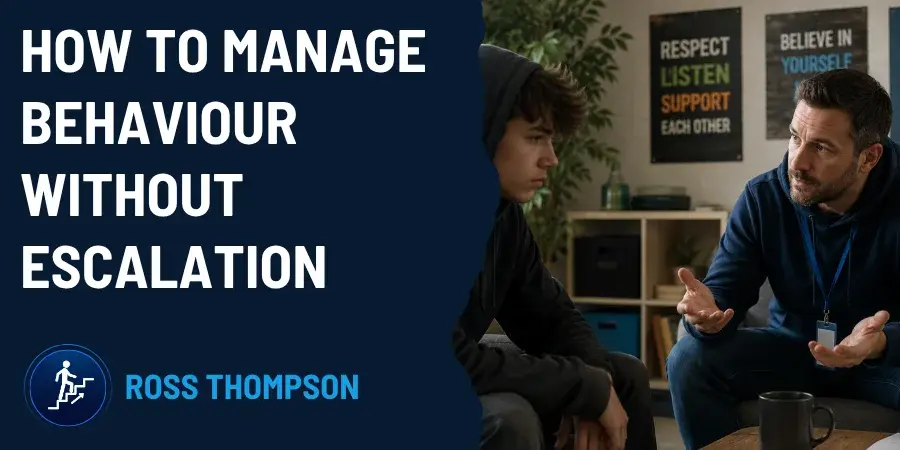
If your current approach to managing challenging behaviour in youth work relies on consequences, warnings or removal, you are likely firefighting rather than fixing the problem.
That is not a criticism.
It is the reality in many schools, youth settings and organisations.
Behaviour gets labelled as “challenging”, but the response often stays surface-level. The result? Repeat incidents, escalation and young people drifting closer to suspension, exclusion from schools and pupil referral units.
There is a better way. One that protects your time, supports the young person properly and reduces long-term risk.
This blog post breaks it down into practical, usable strategies that actually shift behaviour.
Why “Challenging Behaviour” Is Often Misunderstood
Before you can manage behaviour effectively, you need to understand what you are really looking at.
Most behaviour that is labelled as “challenging” is not random. It is purposeful, even if the young person cannot explain it.
Common drivers behind behaviour:
Poor emotional regulation.
Low self-worth or identity struggles.
Trauma or adverse experiences.
Lack of structure or boundaries at home.
Peer pressure and status-seeking.
Frustration with academic or social failure.
Think of behaviour like a dashboard warning light. You can ignore it, cover it up or deal with the underlying issue.
Too many systems focus on control.
Effective youth work focuses on understanding and redirection.
The Cost Of Getting It Wrong: Suspension And Exclusion
When behaviour is not addressed early, it escalates.
You start seeing patterns like:
Increased disruption in class or sessions.
Conflict with peers or staff.
Refusal to engage.
Risk-taking or defiant behaviour.
This is where the risk of suspension or exclusion from schools and pupil referral units becomes real.
And here is the key point most people overlook:
Exclusion does not solve behaviour. It often reinforces it.
Once a young person is removed from a mainstream environment, they can:
Feel rejected or labelled.
Lose structure and routine.
Associate with higher-risk peer groups.
Develop a stronger “anti-system” mindset.
This is why early intervention coaching is not a luxury.
It is essential.
Managing Challenging Behaviour In Youth Work: What Actually Works
1. Build Influence Before You Try To Correct Behaviour
Young people do not respond well to authority alone. They respond to connection and consistency.
If you have no relationship, your correction will feel like control.
Focus on:
Learning what matters to them.
Showing genuine interest, not interrogation.
Being consistent in your tone and expectations.
A young person is far more likely to listen to someone they respect than someone they fear.
2. Separate The Behaviour From The Person
I say this all the time - and this can be applied to anyone. One of the biggest mistakes in managing challenging behaviour in youth work is labelling the young person instead of addressing the behaviour.
Instead of:
“You are disruptive.”
Shift to:
“That behaviour is not helping you right now.”
This keeps dignity intact while still holding boundaries.
It also prevents identity from becoming tied to behaviour, which is often where long-term issues develop.
3. Use Clear, Calm And Direct Communication
Lengthy explanations rarely work in the moment.
When behaviour escalates, keep your communication:
Short.
Calm.
Clear.
For example:
“Stop. That is not acceptable. Step outside and we will talk.”
No emotional reactions. Just clarity.
4. Identify Triggers And Patterns
If behaviour keeps repeating, there is a pattern.
Start tracking:
When the behaviour happens.
Who is involved.
What happens just before.
What the outcome is.
This gives you insight into whether the behaviour is:
Attention-seeking.
Avoidance-based.
Emotion-driven.
Socially influenced.
Once you understand the pattern, your response becomes strategic rather than reactive.
5. Teach Skills, Not Just Rules
Many young people are told what not to do, but never shown what to do instead.
This is where coaching becomes powerful.
Instead of:
“Stop being aggressive.”
Teach:
How to pause and regulate.
How to express frustration.
How to walk away from conflict.
Behaviour improves when skills improve.
Early Intervention Coaching: The Turning Point
Early intervention coaching works because it focuses on the root causes, not just the behaviour itself.
What it provides:
A safe space to explore thoughts and emotions.
Practical tools for managing reactions.
Clear goal-setting and accountability.
Confidence-building through small wins.
For young people at risk of exclusion, this can be the difference between escalation and stability.
Real Example: From Disruption To Direction
A young person I worked with had repeated incidents in school. Disruptive, disengaged and on the edge of exclusion.
On the surface, it looked like defiance.
In reality, it was frustration.
He felt behind academically and used behaviour to avoid embarrassment.
Through focused 1:1 coaching:
We built self-awareness.
Introduced simple regulation techniques.
Set achievable targets for engagement.
Reframed his mindset around effort and progress.
Within weeks, staff at school noticed a shift. Not perfect behaviour, but consistent improvement.
That is the goal. Progress, not perfection.
Avoid Suspension And Exclusion With The Right Support
If you are serious about avoiding suspension and exclusion from schools and pupil referral units, you need to act early.
Waiting until behaviour becomes severe limits your options.
Practical steps you can take now:
Refer for early intervention coaching.
Create consistent expectations across staff.
Focus on skill development, not just discipline.
Involve parents or carers where possible.
Track progress, not just incidents.
The earlier you step in, the easier it is to redirect behaviour.
Targeted Support: 1:1 Coaching For Young People
This is where structured support makes a real difference.
Resilience & Mindset Coaching
Designed for young people who:
Struggle with confidence or self-belief.
React emotionally under pressure.
Feel stuck or disengaged.
Outcomes:
Improved emotional control.
Stronger decision-making.
Increased motivation and focus.
At Risk Of Permanent Exclusion Coaching Sessions
This is targeted support for young people already showing high-risk behaviour.
Focus areas:
Behaviour awareness and accountability.
Managing conflict and triggers.
Rebuilding structure and routine.
Developing future-focused thinking.
Results:
Reduced incidents.
Improved engagement.
Lower risk of exclusion.
This is not about quick fixes. It is about creating lasting change.
Supporting Parents And Professionals
Managing challenging behaviour in youth work is not just about the young person. It involves the system around them.
For Parents:
You gain practical tools to support behaviour at home.
You understand what is driving your child’s actions.
You feel more confident setting boundaries.
For Schools and Organisations:
You reduce pressure on staff.
You create a consistent behaviour approach.
You improve outcomes for young people.
A Practical Framework You Can Use Immediately
If you want something simple and effective, use this framework:
The RESET Approach
R – Recognise - Notice patterns and triggers.
E – Engage - Build connection before correction.
S – Simplify - Keep communication clear and direct.
E – Equip - Teach practical skills for behaviour change.
T – Track - Measure progress and adjust your approach.
This keeps your strategy focused and consistent.
The Emotional Shift That Matters
When behaviour improves, it is not just about fewer incidents.
You start to see:
Increased confidence.
Better relationships.
A sense of control and direction.
Reduced stress for everyone involved.
That is the real outcome.
Stop Managing, Start Changing
Managing challenging behaviour in youth work is not about control. It is about understanding, structure and skill-building.
If you stay reactive, behaviour will keep repeating.
If you take a proactive, coaching-led approach, you create real change.
Ready To Take Action?
If you are working with a young person who is struggling with behaviour, or at risk of exclusion, now is the time to act.
Here is your next step:
Explore 1:1 Coaching for Young People.
Enquire about the At Risk of Permanent Exclusion coaching sessions.
The earlier you intervene, the greater the impact.
Not Sure Where To Start?
Take the quick Find Your Support quiz to see which coaching, training or support option could help you move forward with more clarity, confidence and direction.
