


Prison Mentorship Programs And Supporting Young Offenders
Explore how prison mentorship programs support young offenders and how professionals can upskill through mentoring, training and reflective supervision.
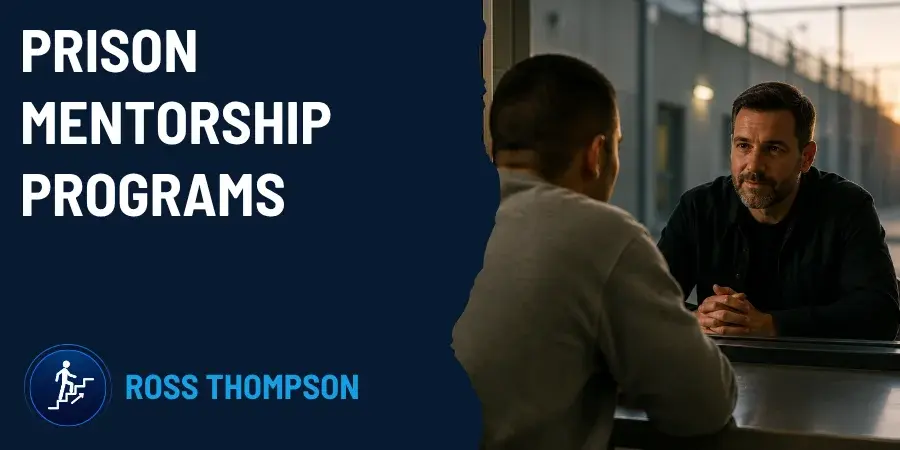
You’re sitting opposite a young person who has already been labelled difficult, non-compliant or high risk. They’ve been through interventions, warnings, sanctions and “support plans”.
On paper, everything has been done. In reality, nothing has truly landed nor really changed.
This is where prison mentorship programs and effective mentoring beyond the prison walls become more than a tick-box intervention. They become a turning point.
For professionals working with young offenders, mentoring isn’t about rescuing, fixing or being overly soft. It’s about connection with purpose, structure with humanity and belief backed by skill.
Done well, it changes trajectories.
Done poorly, it reinforces distrust.
This blog post explores why mentoring young offenders works, how professionals can deliver it effectively and how developing your own mentoring skills is just as critical as supporting the young people themselves.
Why Prison Mentorship Programs Matter For Young Offenders
Young offenders are often described through statistics: reoffending rates, risk factors, age of first offence...
What any readily available figures rarely show is the pattern underneath.
Most young people involved in the criminal justice system have experienced:
Repeated rejection by adults.
Inconsistent boundaries.
Low expectations or no expectations at all.
A lack of stable, trusting relationships.
Prison mentorship programs work because they interrupt that pattern.
At their best, they offer:
A consistent adult presence.
Clear boundaries without judgement.
Challenge alongside support.
A belief in change that feels earned, not forced.
For many young people in custody or under supervision, a mentor is the first adult who hasn’t given up, panicked or tried to control them.
That doesn’t happen by accident. It happens through skilled, intentional mentoring.
Mentoring I Prisons Is Not About Being “Nice”
One of the biggest myths around mentoring in prisons is that it’s about being friendly, relaxed or overly understanding.
In reality, effective mentoring in prisons is:
Structured.
Boundaried.
Purpose-driven.
Emotionally intelligent.
Young offenders are highly attuned to inconsistency.
If boundaries shift, expectations wobble or the professional becomes emotionally reactive, trust fades away quickly.
Strong mentoring relationships hold the line and the person.
This is where professionals often struggle, not because they don’t care, but because they haven’t been given the space or training to reflect on:
Their own emotional responses.
Power dynamics.
Burnout and compassion fatigue.
The balance between empathy and accountability.
The Evidence Behind Inmate Mentoring Programs
Research consistently shows that structured inmate mentoring programs can:
Reduce reoffending.
Improve emotional regulation.
Increase engagement with education or rehabilitation.
Build pro-social identity and future orientation.
But outcomes depend heavily on how mentoring is delivered.
Programs that fail often share common issues:
Mentors are under-trained.
Relationships lack structure or direction.
Mentors absorb emotional weight without supervision.
Mentoring becomes reactive rather than intentional.
This is why mentoring should never exist in isolation from professional development and supervision.
The Role Of The Prison Mentor Or Prison Coach
Whether you’re working inside custody, with young people on licence or supporting those at risk of entering the system, your role as a prison mentor or prison coach carries influence, whether you acknowledge it or not.
Young people watch:
How you respond under pressure.
Whether your words align with your actions.
If you mean what you say.
Whether you see their behaviour or their potential.
A skilled mentor doesn’t shy away from difficult conversations. They don’t collude, rescue or moralise. They create clarity.
What Effective Mentoring Looks Like In Practice
Strong mentoring with young offenders often includes:
Clear goals agreed with the young person.
Honest conversations about choices and consequences.
Consistency in approach, even when behaviour fluctuates.
Emotional regulation modelled, not preached.
Language that separates identity from behaviour.
This isn’t instinctive. It’s learned, refined and strengthened over time.
Mentoring Young Offenders Beyond Custody
Not all mentoring happens behind prison walls.
Many professionals work with:
Young people at risk of custody.
Those on police radar.
Individuals engaging in antisocial behaviour.
Young people cycling through exclusions, warnings and short-term interventions.
Mentoring at this stage is often where the greatest impact can be made.
Early, skilled mentoring:
Interrupts escalation.
Builds insight before patterns harden.
Offers alternatives without lectures.
Helps young people reconnect with a sense of agency.
This is where mentoring young offenders becomes both preventative and transformational.
Practical Mentoring Strategies Professionals Can Use
Below are approaches that consistently improve engagement and outcomes when mentoring young offenders.
1. Start With Identity, Not Behaviour
Young people are more than their offence history.
Shift conversations from:
“Why did you do that?”
To:
“What kind of person do you want to be when this is behind you?”
This reframes responsibility without shame.
2. Use Boundaries As Safety, Not Control
Clear boundaries reduce anxiety.
Be explicit about:
What you can and cannot do.
What the mentoring space is for.
What happens if boundaries are tested.
Consistency builds trust faster than flexibility ever will.
3. Set Small, Achievable Goals
Large goals can feel overwhelming for young people who’ve experienced repeated failure.
Effective mentoring focuses on:
Short-term wins.
Behavioural shifts.
Effort, not perfection.
Momentum matters more than motivation.
4. Stay Curious, Not Reactive
When behaviour escalates, curiosity keeps you grounded.
Instead of reacting, ask:
“What’s going on underneath this?”
“What’s being protected here?”
This protects the relationship and your emotional energy.
The Impact On You As A Professional
Supporting young offenders is meaningful but also demanding.
Without the right support, professionals often experience:
Emotional exhaustion.
Reduced confidence.
Blurred boundaries.
Frustration when progress stalls.
This is why upskilling and supervision are not luxuries. They’re safeguards.
Strong prison mentorship programs invest not just in young people, but in the professionals delivering them.
Strategic Mentoring Training As The Next Step
If you’re mentoring young offenders, whether formally or informally, Strategic Mentoring Training provides a structured way to deepen your practice.
It’s designed for professionals who want to:
Strengthen their mentoring framework.
Understand behaviour beneath the surface.
Maintain authority without power struggles.
Build sustainable, effective relationships.
Rather than theory-heavy content, the focus is on real-world application, inclusive of what actually works with complex young people.
This training naturally complements:
Youth work.
Probation and resettlement roles.
Education and alternative provision.
Safeguarding and early intervention services.
You can explore this further via the Strategic Mentoring Training page on the site.
Supervision As A Reflective And Protective Space
One of the most overlooked aspects of mentoring work is supervision.
Group or one-to-one supervision offers:
Space to process difficult cases.
Reflection without judgment.
Support to maintain boundaries.
Insight into blind spots.
Rather than seeing supervision as oversight, effective professionals use it as a tool for longevity and growth.
Supervision strengthens practice and protects you from burnout.
Creating A Pathway For Young People Beyond Mentoring
Mentoring doesn’t exist in isolation.
For some young people, mentoring becomes the gateway into:
One-to-one coaching.
Specialist intervention around offending behaviour.
Structured packages of support focused on accountability, emotional regulation and future planning.
This is where your practice can naturally connect with:
Youth Offending: Resilient Futures (a package of 5 targeted coaching sessions)
Mentoring opens the door. Targeted coaching helps them walk through it.
Why This Work Matters
When mentoring is done well, young people don’t just change their behaviour but they also change how they see themselves.
They move from:
“This is just who I am.”
To:
“I can choose differently.”
For professionals, the shift is just as powerful:
Increased confidence.
Clearer boundaries.
Stronger outcomes.
A renewed sense of purpose.
That’s the real impact of effective prison mentorship programs.
Become A High-Impact Mentor
If you’re working with young offenders, whether in custody, in the community, in school or at the point of risk, your role matters more than you may realise.
But impact doesn’t come from intention alone. It comes from skill, reflection and support.
👉 Book your place on Strategic Mentoring Training to strengthen your practice, sharpen your approach and gain tools you can use immediately with young people. Become a high impact mentor with this two-hour training.
👉 Explore group or one-to-one supervision as a safe, supportive space to reflect and grow professionally.
And if you’re supporting a young person who needs more focused input, mentoring can naturally lead into one-to-one coaching or Youth Offending: Resilient Futures that helps them step away from offending patterns and towards something better.
You don’t just support change. You shape it, but only when you’re properly equipped to do so.
Not Sure Where To Start?
Take the quick Find Your Support quiz to see which coaching, training or support option could help you move forward with more clarity, confidence and direction.
